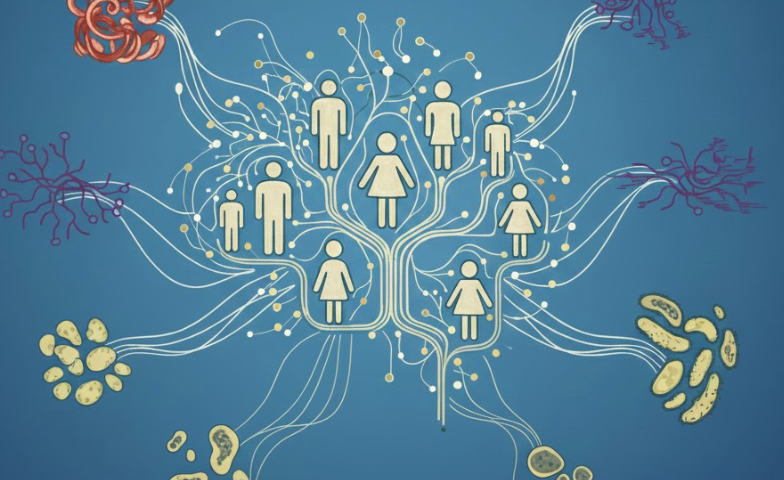
Systems Thinking and the Unidisease Concept
In this interview, Dr. Michael Kerr, director of the Bowen Center for the Study of the Family, discusses his decades-long application of Bowen family systems theory to physical illness, particularly cancer, and his development of the uni-disease concept. He is interviewed by Dr Monica Baege, faculty with the Vermont Center for Family Studies in Burlington, Vermont.
Kerr posits that by conceptualizing the relationship system, it becomes possible to assess illness in ways that haven’t been possible before, moving beyond traditional cause-and-effect medical models. He traces his early development of cancer research beginning in the 1970s when Murray Bowen suggested he investigate cancer as similar to schizophrenia, leading to systematic interviews with cancer patients at Georgetown hospital over five years.
Kerr explores how he discovered different patterns in nuclear family emotional process, finding that cancer patients often functioned as over-functioning family members who made extensive adjustments to maintain system harmony, rather than the under-functioning pattern typically seen in psychiatric symptoms. He examines multigenerational patterns in cancer families, drawing parallels to multi-generational emotional processes described in Bowen theory and developing his uni-disease concept, which proposes that emotional process can manifest in various ways including cancer, diabetes, and psychiatric conditions. Kerr discusses the mind-body connection and emerging biological mechanisms, particularly inflammation and cellular relationships, that support systems thinking approaches to illness. He contrasts systems thinking with cause-and-effect models, emphasizing the importance of understanding context and relationship disturbances at multiple levels.
Kerr reflects on the challenges of presenting these paradigms to medical professionals while maintaining confidence in Bowen theory’s accuracy and usefulness, anticipating that systems thinking will eventually integrate across disciplines to create a more comprehensive understanding of human illness.
Do you like past BTA webinars we are making available on our website? Also, here is a link to an educational program of the Kansas City Family Center using past webinar videos: https://www.kcfamilysystems.org/webcast_series/